Friday, March 23, 2007


Friday, December 01, 2006
Yogurt - healthy but not 100% veg

Yogurt is a highly nutritious food that is tasty, easy to obtain and transport. However, this cup of yogurt is not a simple product. Manufacturers adjust the ingredients to make a creamy product and to control the calorie content.
Noticed something really interesting. Gelatin serves a number of useful functions in a yogurt product. It forms a creamier product and keeps the fruit suspended in the yogurt. It also serves as a bulking agent, reducing the calorie content, by replacing the yogurt with water. Non-fat yogurt has 130 calories per 8 oz. without any sweeteners. To get 100-calorie yogurt, less yogurt is used.
But not many people know that gelatin, is by definition an animal product. The gelatin used in current yogurt products is produced from pork or non-kosher slaughtered beef !!
Don't believe me? Next time you have a yogurt check the ingredients or read it here.
Thursday, October 19, 2006
Happy Diwali

Sofi's cafe wishes all its readers and friends a very Happy Diwali with happiness, prosperity, wealth and love.
Tuesday, October 17, 2006
New Tubes for Google in making

What I love about YouTube is that it gave clean checkmate to Google video(No 1 search engine) based on it's video search capabilities!! So what's next?? Couple of good examples I can think of are Netvibes.com & Live-documents.com (It's a long way though) .
What struck me most was the details about the Live-documents.com. This Banglore based puppy is co-founded by Sabeer Bhatia (Guano! The hotmail.com guy)!!!
Wednesday, August 23, 2006
Wednesday, August 16, 2006
A simple theory
 If you have an apple and I have an apple and we exchange apples then you and I will still each have one apple. But if you have an idea and I have an idea and we exchange these ideas, then each of us will have two ideas.
 -George Bernard Shaw

Saturday, August 12, 2006
Maison de L'Amitie
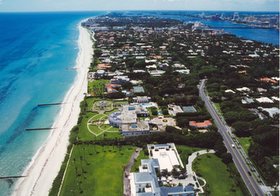
While reading "Most expensive homes in the World" on Forbes, I read about this amazing deal of Mr. Trump. Here it is:
No. 3
$125 million
Maison de L'Amitie
Palm Beach, Fla.
In 2004, Donald J. Trump bought former health care executive Abe Gosman's palace, Maison de L'Amitie, at a bankruptcy auction for $41.25 million. With the refurbished version--complete with ballroom, conservatory, 100-foot-long swimming pool and 475 feet of oceanfront--he aims to set a U.S. sales record. It is listed with Dolly Lenz and Geoff Thomas at Prudential Douglas Elliman.
Saturday, August 05, 2006
"The 333 Story"

I was doing a weekend seminar at the Deerhurst Lodge, north of Toronto. On Friday night a tornado swept through a town north of us called Barrie, killing several people and doing millions of dollars worth of damage. Sunday night, as I was coming home, I stopped the car when I got to Barrie. I got out on the side of the highway and looked around. It was a mess. Everywhere I looked there were smashed houses and cars turned upside down.
That same night Bob Templeton was driving down the same highway. He stopped to look at the disaster just as I had, only his thoughts were different than my own. Bob was the vice president of Telemedia Communications, which owns a string of radio stations in Ontario and Quebec. He thought there must be something we could do for these people with the radio stations they had.
The following night I was doing another seminar in Toronto. Bob Templeton and Bob Johnson, another vice president from Telemedia, came in and stood in the back of the room. They shared their conviction that there had to be something they could do for the people in Barrie. After the seminar we went back to Bob's office. He was now committed to the idea of helping the people who had been caught in the tornado.
The following Friday he called all the executives at Telemedia into his office. At the top of a flip chart he wrote three 3s. He said to his executives "How would you like to raise 3 million dollars 3 days from now in just 3 hours and give the money to the people in Barrie?" There was nothing but silence in the room.
Finally someone said, "Templeton, you're crazy. There is no way we could do that."
Bob said, "Wait a minute. I didn't ask you if we could or even if we should. I just asked you if you'd like to."
They all said, "Sure, we'd like to." He then drew a large T underneath the 333. On one side he wrote, "Why we can't." On the other side he wrote, "How we can."
"I'm going to put a big X on the 'Why we can't side.' We're not going to spend any time on the ideas of why we can't. That's of no value. On the other side we're going to write down every idea that we can come up with on how we can. We're not going to leave the room until we figure it out." There was silence again.
Finally, someone said, "We could do a radio show across Canada."
Bob said, "That's a great idea," and wrote it down.
Before he had it written, someone said, "You can't do a radio show across Canada. We don't have radio stations across Canada." That was a pretty valid objection. They only had stations in Ontario and Quebec.
Templeton replied, "That's why we can. That stays." But this was a really strong objection because radio stations are very competitive. They usually don't work together and to get them to do so would be virtually impossible according to the standard way of thinking.
All of a sudden someone suggested, "You could get Harvey Kirk and Lloyd Robertson, the biggest names in Canadian broadcasting to anchor the show." (That would be like getting Tom Brokaw and Sam Donaldson to anchor the show. They are anchors on national TV. They are not going to go on radio.) At that point it was absolutely amazing how fast and furious the creative ideas began to flow.
That was on a Friday. The following Tuesday they had a radiothon. They had 50 radio stations all across the country that agreed to broadcast it. It didn't matter who got the credit as long as the people in Barrie got the money. Harvey Kirk and Lloyd Robertson anchored the show and they succeeded in raising 3 million dollars in 3 hours within 3 business days!
You see you can do anything if you put your focus on how to do it rather than on why you can't.
-Bob Proctor From Chicken Soup for the Soul
Monday, July 31, 2006

Saturday, July 29, 2006
"Point of View Shift Is Worth 80 IQ Points"

Out-of-the-box thinking is quite familiar. However the idea that taking a different point of view can literally be worth as much as adding 80 points to your IQ takes this concept to a much higher level.
An example of reverse:
Blind, deaf and dumb - with rediculously low IQ's - is how the management at Xerox must have seemed to Alan Key. Management was well educated but they failed to the see the vast market potential for the cutting edge technology that the small group of computer engineers at Xerox Parc had developed. This group of 20 smart scientists and engineers had created the technology that resulted in computer workstations(that inspired Mac & Windows),Ethernet, network "client-servers," GUI, the Smalltalk programming lenguage, desktop publishing and laser printing.
Yet, management just didn't get it.
The only way Alan Kay could explain how management failed to recognize that each of these ideas represented a multimillion (and often multibillion) dollar market was with this insight.
Another example:
"Crazy" is the first thing that comes to mind when someone says they will charge $15.00 for what you can get for $0.34.
Yet this is exactly what FedEx did. Fred Smith's point of view shift was to make sure that the mission critical documents could be delivered reliably overnight and tracked as well. The concept behind FedEx seems very obvious today but at the time, people told Fred Smith he was completely nuts.
You can use the "point of view shift" to help level the playing field when competing with very smart people in the market place.
Big Lesson:
"The one thing that you can say about paradigms is that they shift"
-Alain Rossman
Saturday, July 15, 2006
Boom Time for Bold Indopreneurs
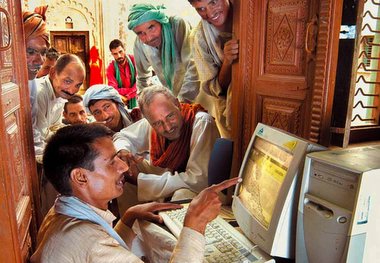
I have been surfing the web for many years now and I have seen various web industries growing online. And it is fascinating experience to see many great companies making new normals. Here are few of these successful companies who brought new meanings to cyber space and changed the way we use the internet.
○ Google - Changed the way people search the web
○ Yahoo-First portal attracting millions of users
○ E-Bay - Buy/Sell/Bid, who knew people would like that..
○ Amazon- Started with selling books and now almost everything
○ MSN - Portal/Search, Email, Video
○ Myspace - Online social space, fastest growing industry today
Now let's talk about India for a moment. India, with 350,000 new engineers a year, is outdoing the US, a study suggests. According to another report, there were 39 million Internet users in India in 2005, a 54% year on year increase. The number of Internet users could exceed 100 million by 2007, making India the second-largest Internet market in Asia after China. In addition, there were more than 100,000 Internet cafes in India in 2005. Many experts believe that India will be the most important online market in the world in 10 years, not China. And many of the companies listed above already have a platform ready for India.
Apart from few Indian companies like Rediff.com, Kosmix.com, Shaadi.com, Blogeverywhere.com and Sulekha.com, there is hardly any global name which comes to my mind. I always wonder WHY? Well I strongly believe that India has the brain and the man power to create one. Then may be the policy makers are not making it conducive. May be someone can answer that for me.
But I think Indian market has great potential. The place is full of small businesses and diverse culture. All one needs is a big idea. Google's big mantra is to get users and not the money, the money will follow. And considering Indian population one can attract great number of users. The place is a cultural paradise. She has very distinctive art, the music, the travel, the products, the science, the culture and so much more to offer.
Let's wait and see who is next Badshah(King) of India's online market. The game is on and we need more players like Sabeer Bhatia for Web 2.0...
References -
TECH TALK: India Needs More Entrepreneurs: Start-up!
TECH TALK: India Needs More Entrepreneurs: Why?
TECH TALK: India Needs More Entrepreneurs: How?
TECH TALK: India Needs More Entrepreneurs: A Personal View
TECH TALK: India Needs More Entrepreneurs: My Dreams
Spreading the Indian mantra overseas
Creating Indian Entrepreneurs by Rajat Gupta
Imerging Giants
For entrepreneurs, now is the time
A great resource for startups in India
Tuesday, July 04, 2006
Ingredients of Google success
Slideshow
Btw Marissa what's up with that laugh...:)
Thursday, June 22, 2006
Wednesday, October 05, 2005
Hello, Are you from India?
So this Desi stranger walked towards me while I was shopping in a mall and asked “Hello, Are you from India?” After 5 minutes of introduction we exchanged the phone numbers. The next thing I know is that I am a victim of DQMS (Desi Quixtar Marketing Strategy) again. I bet if you are a Desi then you know what I am talking about.
Seriously don’t get it. I truly might hold the world record for having been contacted by more Ambots than anyone else but none of them was non-desi!! May be there are non-desi who set the example for fellow desis. Do they not do this to white people? May be too scared to or may be its much easier to start a conversation when you've laid down a familiar base and used the time proven 'desi bhai' icebreaking routine. It's harder for Gopal Venkatarmanisubramaniam to approach Bob Anderson and find common ground.
And I bet all of this desi friends, who do this, know very well that people hate it when approached at Costco, Barnes & Nobles, Walmart etc. Then why?
May be they should come up with a new marketing strategy. India is the best country in the world and I am really proud of being an Indian. But the time I meet this kind of fellow Indians is the only time I have to say - I'm not "from India".
Reference:
http://quixtarsucks.blogspot.com/2005_09_01_quixtarsucks_archive.html
http://www.msnbc.msn.com/id/4375477/
Monday, July 25, 2005

F-R-I-E-N-D-S
Etymology
Definition
A group of friends consists of two or more people who are in a mutually beneficial and reciprocating relationship. The comraderie arising from such sentiments is often referred to as a friendship.
I've been thinking lately about friendship and those who are friends. It seems that there is almost no end to those trying to define 'friendship,' so who am I to buck the trend.
In second grade my idea of a good friend was the person who helped me stand up to the class bully. In high school my idea of a friend was the person who let me copy the social studies homework from the night before that I had. In college my idea of a friend was the person who bunked the class with me and discussed how useless the class was.
Maybe the time has gone, but the faces I recall. Things in this life change very slowly, if they ever change at all. The scary part being that we've all been hit with change lately and it doesn't seem to have come slowly at all. Do you remember the day you left home? I'm sure that you do. But I'll bet that what you remember even more clearly were the days in the college before you left. Do you remember standing by your best friend's car after college farewell night trying to sum up the meaning of a friendship you'd managed to maintain through thick and thin for years?
And then you get to a new place full of strangers. You meet people who forget you. You forget people who you meet. But sometimes, you come across some extra ordinarily special people. You learn a lot when you go to this new place. You learn to appreciate the taste of beer-the cheapest of all alcoholic beverages. You learn that you can roll out of bed 10 minutes before class and go to class looking like shit-and no one will notice or care. You learn you really can do things for yourself without your parents looking over your shoulder--but you also learn you never realized how nice it was to have them there, just in case. More than anything, however, you learn how much your friends really mean to you. College friends come to mean a lot to you, but they can never compare to your friends from home. Your friends from home teach you the meaning of friendship during your college years. Because you are apart from them you tend to express your feelings more --- you learn how much these people truly affect your life.
Simply putting�1 million memories..1 hundred thousand inside jokes..10 thousand great times..1 hundred secrets..1 reason..F-R-I-E-N-D-S
Continues........
Saturday, May 07, 2005
Letter to NRI by Rajesh Jain (www.emergic.org)
TECH TALK: Dear NRI: India Rising
Dear Non-Resident Indian,
I have a simple message for you: Now is the time to consider returning to India – both for a better personal life and for helping build the New India. India is changing, at least one part of India that constitutes urban India. There is an optimism in the air. Opportunities abound. India is Rising. The time to think about a return to India is Now.
For many like you who left India for the prospects of better opportunities abroad, the image of India remains frozen at the time that they departed. Subsequent short, annual visits have probably only given fleeting glimpses of the changes that are taking place. So, the status quo of the image persists. Landing at one of the airports does little to erase the impression of an arrival at a third-world country. Pollution, traffic jams, poverty may be visibly all there. So what really has changed about India?
In one word: Attitude. The last few years have seen Indian self-confidence rise. It is a mix of various factors. The growth of the Indian software services industry in the face of a worldwide slowdown, the boom in business process outsourcing (rarely a day goes by without a new announcement of another global major deciding to shift some of its services to India), the rising incomes in urban India, a stable government at the centre for the past 4 years, Vajpayee and Kalam at the helm, smart performances by Indian sportsmen (and not just in cricket), the malls and multiplexes, the expressways starting to link cities, Indian companies fighting back the MNCs and the Chinese onslaught, the USD 82 billion forex reserves. Or maybe it is just the pessimism in the rest of the world. Whatever it is, there is a growing feeling in India that the game is ours to win – or lose.
For the first time, I sense a feeling among Indians that tomorrow will be better than today. For a long time, there was a feeling of resigned acceptance – that what is will be. This is changing. There is a growing feeling that what we make of tomorrow is in our hands, that the opportunities are there. What tomorrow brings is more in our hands than divined by destiny. Optimism in the people is not an easy thing to inculcate – it is something which one sees all around, and mirrors it back.
There is a long way to go. But one cannot help feeling that the Indian train is finally moving after decades of standing at the station. There is a sense of purpose and determination – a drive to reach the destination. It is said that a journey of a thousand miles begins with a single step. India and Indians have begun that journey. Perhaps, it is time for you to begin yours.
As the New India emerges, there are plenty of opportunities – not just in the information technology sector (which I am a part of and more familiar with) but also in the other areas. Opportunities are what we make of them. True, there will plenty of ups and downs, but that does not deter from the fact that there is a lot of catching up and leapfrogging that India, its consumers and enterprises have to do. I will talk about the IT space. (I am sure if you speak to people in other sectors you will get a similar sense of the opportunities that lie ahead.)
So far, India has been known for its software services – quality programming and support for a fraction of the cost. Led by Bangalore and followed by other cities, India has carved a niche for itself in developing software for the world’s leading organisations. The Indian software companies, led by TCS, Infosys, Wipro and Satyam, have become part of many technology supply chains. Even as that continues, the new buzz is about extending the Indian advantage to everything service-oriented. Business process outsourcing (or IT-enabled services) is the new talk of the town everywhere. The legacy of English left by the British and our vast numbers are finally being put to good use!
In the telecom sector, companies like Bharti, Orange (and Hutchinson), Idea Cellular (jointly owned by Birla, Tatas and BPL) and Reliance Infocomm are finally bringing connectivity to the masses at affordable prices. The most recent offer from Reliance calls for an invtsment of just Rs 501 (about USD 11) for a cellphone. Smart businessmen are using two cellphones – the second one is a Reliance phone so they can talk long-distance to their branch offices and associates (also on Reliance) for 40 paise (less than 1 cent) a minute. Imagine that. Just a few years, a peak hour Mumbai-Delhi call cost 100 times as much.
There are two large untapped opportunities that lie ahead in India: SMEs and the rurals markets. Both are very similar in the sense that there has been a co-ordination failure among the various solution providers, with the result that the small and medium enterprises and the people of rural India find themselves in a low-equilibrium situation. They are “invisible markets”, underserved by the existing solution providers. New technology and a co-ordinated effort by multiple players has the potential to carve open two large markets: there are estimated to be 3 million SMEs in India, and 700 million in rural India.
What they need are innovative solutions built using the newest technologies – the ones that you know and understand well. From eBusiness software suites to WiFi, from mobile applications to alternative sources of energy – there is plenty of scope for “disruptive innovations” to tap into these markets in India, and then take the solutions to the other emerging markets of the world.
Opportunities also exist in every sector – if one is willing to think entrepreneurially. What is needed is Will and Vision to make a difference. Yes, there will be failures, but the New India is willing to take these in its stride. After all, Silicon Valley was built not just on the successes of a few, but the failures of many. It is for us – Indians and NRIs – to help build the New India.
The next time you are in Mumbai, take a drive down Senapati Bapat Marg (Tulsi Pipe Road). Two decades ago, it housed many of Mumbai’s mills. It was an area of poverty and squalour. Some of that still exists. But in the past decade, this area has begun a transformation which would have been unthinkable. A few chimneys still remind onlookers of its heritage.
Today, Phoenix Mills is better known as the home of Big Bazaar (a Wal-mart clone). The crowds on weekend evenings need to be seen to be believed. It is not just the Indian middle-class shopping there; the affordability theme in Big Bazaar’s prices has cut across income levels. In the vicinity, there is a Planet M (a music store), Barista (a Starbucks clone), McDonalds (with an Indianised menu), a bowling alley, two restaurants serving everything from North Indian to Mexican to Lebanese to Chinese cuisine. Coming up soon: a multiplex. In the same mills compound are plenty of offices and two tall residential towers.
A little walk down, there is Morarjee Mills, which is transmogrifying into Peninsula Corporate Part. The glass buildings have a “shock-and-awe” effect on visitors. The complex now houses the Mumbai headquarters for Orange, Airtel (Bharti’s cellular band), J Walter Thompson (India’s leading ad agency), an insurance venture from the Kotak Mahindra group, along with ICICI’s BPO business (ICICI One Source). Two more buildings are coming up, with parking for a thousand cars to be available in the basements. Go a little further down and there is Kamala Mills, now Kamala City. It is a huge sprawling complex, which has more big names.
The scene is being repeated across India – Whitefield in Bangalore, Gurgaon in Delhi, and an equivalent in every other city. The New India is emerging even as the old India co-exists side-by-side. A Barista selling coffee for Rs 50 shares walls with an Udipi restaurant selling filter coffee for a tenth of the price. In fact, on the other extreme, Bangalore pubs would even lead some to re-evaluate the meaning of “Western culture”! One can argue about the impact and the merits, but urban India is globalising – rapidly, and irreversibly.
Restaurants are sprouting up everywhere offerings all varieties of cuisine, as incomes rise. International-quality schools are coming up. Dozens of car models are available to choose from. Indian ads are getting acclaim worldwide. Television channels are aplenty and real cheap too (a hundred channels for less than Rs 300). Indian fashion is going global even as international brands are coming into India.
The New India is rising. The elephant is finally stirring. And the emergent effect is such that no government, no politicians can stymie this revolution. More than five decades after Independence, Indian entrepreneurs are showing the face of what India can do. It is for us – the New Generation – to help build the New India with our ideas and innovations, our energy and determination, so that the Next Generation can grow up in a Developed India.
I meet and speak with many NRIs – in India and during my travels abroad. One of the most common reasons given for not returning to India is “the family” – how will the kids adjust, schools in India are tough to get into and overload the children with so much homework, there is so much pollution, and so on. To me, this is an excuse for not upsetting the status quo, to stay in the comfort zone. Life for most of you is nicely compartmentalised into 48-50 working weeks, with 2-4 weeks of an obligatory vacation in India so “the kids can get a sense of Indian culture.”
What we forget is that we too are products of India’s education system – the same one we tend to criticise now. Yes, the Indian education system focuses less on the creative skills than on memorisation. Yes, Indian school kids have plenty of homework thrust upon them everyday. But that is what is making us what we are – smart, diligent, intelligent, ready to adapt to any kind of situation. The lack of creative outlets at school have not prevented Indians from excelling in other walks of life. What matters is the academic discipline the Indian education system instills in us. We have gone through it, and there is no reason why the next generation should not go in for it.
So, the family argument is one which holds little water. It is an excuse to not make tough decisions. After all, when life is going along reasonably comfortably, why disrupt it? And so life goes on, and another year passes. The India visits serve little purpose because you come as tourists. The India you know is the India you left behind when you went abroad. And that India, unknown to you, has changed beyond recognition.
I lived abroad for four years, and returned to India a decade ago. For me, India is home. Whenever I travel abroad, there is always a feeling of temporariness, a lack of one’s roots. One can always look at the negatives, but there are plenty of positives now to look forward to. And those are the ones you should focus on – after eliminating the option of returning back to where you came from.
Family – along with personal opportunities – is in fact one of the primary reasons for returning back to India. There is a support system in India with the extended family, which is always there – no questions asked, no obligations expected. For the kids, there is a love from doting grandparents, and uncles and aunts, and many other siblings. In India, skin colour is not used to discriminate. We are all one – Indians.
It is time for you to ask themselves a basic question: what do I do with my life? The answer to that can help guide the decision to return to India – or not.
Much of the world is stuck in a no-growth or slow-growth zone. History and the excesses of the recent past have caught up with the US, Canada, Western Europe, Japan, Singapore and Hong Kong. Contrast that with the growth opportunities that are being seen for India and China. Where would you be rather be for the next decade? That is the fundamental question NRIs need to ask themselves. It is in this context that a return to India needs to viewed. Simply put, life in these developed markets is going to be more of the same for the most part of the next few years. Life in India is going to be a roller-coaster ride, but one which seeks out higher-levels with each curve. Take your pick.
There is a need to think through the alternatives that are there. The easiest decision is to not make one – and let things go along as they are. The N+1 Syndrome – “just one more year” – will ensure the decision never gets made. The tougher decision is to pack one’s bags and return back. It is a very difficult decision to make because now, India is the foreign land! When you left India, there were few cares and commitments. Now there are many. The decision is not an easy one.
Consider the alternatives carefully. You know your business and the industry you are working in. How will life be in the next 3-5 years? What are the opportunities? On the personal front, what does your family want to do? Are you willing to accept a “disruptive innovation” in your life – or would you prefer maintaining the status quo and hoping for the best?
If you do decide to consider a return to India, here are a few suggestions. Take time off from work for 4-6 weeks and come and visit India first. Travel around, meet people, meet prospective employers. If you are becoming an entrepreneur, then meet others in the same space. See your yourself the change that is happening around India. Think about where you want to live. Take a flight on Jet Airways and see the difference. Book a train ticket online – yes, the largest eCommerce site in Asia is now the Indian Railways! Travel on the Mumbai-Pune expressway. Talk to others who have come back. The decision to move is a game of mental chess – only, you are playing against yourself.
I am not trying to give a rosy picture – just one which is realistic, or maybe more optimistic (because I am one). One can of course talk about the things that are wrong in India – and there are plenty. Water shortages, poor infrastructure, periodic power cuts, and so on. If that is the attitude, then India is not for you. However, if you are willing to inject a “disruptive innovation” in your own life and tear up the green card (or the equivalent permanent residency certificate of another country), then India will more when welcome you with open arms.
Friday, May 06, 2005
The future of blogging
From Knowledge@WhartonSpecial to CNET News.comApril 5, 2005, 10:00 AM PDT
Recently, blogs have been credited with everything from CBS News anchorman Dan Rather's departure, to unauthorized previews of the latest Apple Computer products, to new transparency in presidential campaigns. The big question is whether blogs, short for Web logs, have the staying power to become more than just online diaries.
Will bloggers upend the mainstream media? What legal protections should bloggers have? Is there a blogger business model? While no definitive answers exist just yet, experts at Wharton advise questioners to be patient. Blogging, they note, will be around for a long time.
Related contentNews.blogGet our reporters'take on all the latestblogging trends.
Wharton legal studies professor Dan Hunter puts blogging right up there with the printing press when it comes to sharing ideas and disseminating information. "This is not a fad," Hunter says. "It's the rise of amateur content, which is replacing the centralized, controlled content done by professionals."
The growth rate of blogs is impressive. Technorati, a search engine that monitors blogs, tracked more than 8 million online diaries as of March 21, up from 100,000 just two years ago. A new blog is created every 7.4 seconds. That adds up to 12,000 new blogs a day, 275,000 posts a day and 10,800 updates an hour.
"At its most basic level, it's a technology that is lowering the cost of publishing" and turning out to be "the next extension of the Web," says Wharton legal studies professor Kevin Werbach. "Blogging is still in its early days. It's analogous to where the Web was in 1995 and 1996. It's not clear how it will turn out."
What is clear is that opportunities for blogging abound. Companies can use bloggers to put a more human face on interactions between employees and customers; marketers can create buzz through blogs; and bloggers can act as fact checkers for the mainstream media.
There are dozens of applications for blogs, Werbach notes, and many that haven't even been conceived yet. To be sure, the concepts behind blogging aren't exactly new. Comment and feedback have been around as long as the Internet itself. What's new is the
Blogging with a camera phoneease with which people can publish their thoughts on any number of topics, whether it's the latest congressional hearings, the newest gadget or the hottest pair of shoes. "Blogging is really driven by interest and desires, not commercial activity," says Wharton marketing professor Peter Fader. "It's rare to see something take off like this when commercial prospects are so minimal. People just want to share ideas."
The amateur content movement was clearly enabled by the Internet, which made it relatively easy for anyone to start a Web site. Some of those early sites peddled Pez dispensers and antiques (eBay) while others were just directories pointing to other sites (Yahoo). From there, the concept of amateur content has ballooned. In South Korea, for example, a newspaper dubbed Ohmynews.com is written not by trained journalists, but by regular citizens who send in their reports to editors, who then pick the best ones for publication. Companies and individuals have created their own Internet sites offering original information and content. Other sites, like the technology news-oriented Slashdot, are populated by visitors posting items they have seen elsewhere.
Blogging takes those concepts to the next level, says Alex Brown, associate director of admissions at Wharton and a marketing professor at the University of Delaware. "It's really at a nascent stage," adds Brown, who uses blogs to disseminate information for Wharton applicants and keep up with developments at other universities. "It's a great tool. We use it for marketing and to drive people to our sites."
The blogosphere's RathergateBrown acknowledges that blogging is a promising yet undeveloped tool. For now, blogging is much like the Web sites of the mid-1990s--lots of drivel, some useful items and plenty of opinions on every topic.
Today's blogs are mostly associated with politics--not surprising given that former presidential candidate Howard Dean used blogs to rally supporters. Blogs detailing the documents that CBS used to question President Bush's National Guard service were picked apart by bloggers, who pointed out font differences in the documents and thus raised questions about their authenticity.
The scandal, known in the "blogosphere" as Rathergate, ultimately resulted in the anchorman's departure. On the other side of the political spectrum, bloggers detailed Sen. Trent Lott's glowing comments in 2002 about Strom Thurmond's presidential run in 1948 during which he supported segregation. A few apologies later, Lott gave up a bid to be the Senate majority leader.
Click for story
The danger of overtly political blogs is one of selective hearing, Hunter says. If there's a blog for every taste, readers will just flock to sites they agree with. Fader adds that the marketplace of ideas and readers will weed out bloggers who are on the fringe and peddle bad information; they just won't develop an audience. In the future, Fader says, a technology may be created to rate credible bloggers. The system, which would operate like eBay's buyer and seller ratings, could create a blogger pecking order based on readers' opinions.
In the meantime, the courts are trying to figure out whether the First Amendment's freedom of the press protections apply to bloggers. Are bloggers journalists? It's a tricky question, says Werbach. For instance, some bloggers are de facto journalists--because they do interviews, file news stories and provide opinions on current events--and others are just regular people writing about their most recent family vacations. The courts will ultimately have to develop a legal test to extend press privileges, if necessary. "A subset of bloggers performs the task of journalists," Brown adds. "But not all bloggers are journalists."
According to Hunter, determining what will shake out in the courts is anyone's guess. "It's hard to say where this will go legally," he notes, adding that courts will ultimately give press credentials to a select group of bloggers.
For now, the disputes over press protections continue. Apple Computer recently sued a site called Think Secret for publishing information about upcoming products. Apple alleges that by publishing the data, Think Secret divulged trade secrets. Should Think Secret be treated as a journalism site? The issue spawned a host of blog entries and even a blogger boycott of Apple.
The lesson: Apple can use the courts to try to stop product leaks, but the effort is likely to be futile, says Brown. Indeed, a Technorati search turned up a blog revealing mock-ups of an iPad, a tablet PC-like device. "Just because blogging isn't journalism doesn't mean the First Amendment goes away," says Werbach. Hunter agrees. "The difficulty will be developing a test for each case. One size won't fit all."
Related storyFAQ: Bloggingon the jobCNET News.com ex-plains the dos anddon'ts that could saveyou from getting fired.
The whole blogger-as-journalist issue also raises another key issue: Is the mainstream media about to be usurped by a bunch of amateurs? Yes and no. Hunter says the mainstream media worries about blogging just as they initially did about Matt Drudge, who created a tabloid-style news site that features a few stories penned by Drudge but mostly links to other media outlets.
Blogging has already adopted a similar role of chasing tips, rumors and other potential stories. "It's a threat to the mainstream media to the extent that it takes away central control of content and distribution," says Werbach. But "it's not a substitute for the resources and brands that media companies have developed." What's likely is that the mainstream media and blogosphere will share a happy coexistence, he adds. Indeed, bloggers often comment on, and provide links to, articles in The New York Times and other mainstream media.
Whether bloggers supplant the press will depend on their skillfulness, Hunter says, suggesting that for commentary, bloggers' opinions are just as good as commentary printed in newspapers. However, investigative journalism will still be the hallmark of the media. "First-hand reporting will be the distinction between blogging and journalism," Hunter adds. According to Brown, it's a good idea to read both blogs and mainstream news. "A blogger in Iraq can detail things on the ground that journalists often can't...Bloggers are viewed more as fact checkers to keep the media honest. The challenge for mainstream media is to keep up with bloggers' speed."
Overall, Hunter adds, media angst over blogs is misplaced. "The idea that blogging will kill media is as overblown as when they said that e-commerce would kill the retailing business."
The voice of Microsoft in SiberiaMedia navel gazing is one blogger preoccupation, but another development has been the use of Web logs by companies and organizations. Brown relies on blogging to gain market intelligence about what's going on at other business schools and also to update information for Wharton applicants. While Brown says the blog helps Wharton's brand, it's not as easy as it sounds.
The "danger" is that corporations might not "understand the culture of blogging" and produce content that contains carefully vetted material instead of spontaneous writings that appeal to blog fans. Indeed, corporations are allowing employees to keep blogs, and in many cases encouraging online diaries. Microsoft, Sun Microsystems, General Motors and Boeing are just some of the companies that use blogs to communicate with employees and outsiders.
Robert Scoble, a Microsoft employee who operates Scobleizer, a blog about Microsoft products and developments, maintains one of the more interesting blogs around. Scoble, whose official title is "technical evangelist," sounds like many employees at large companies. He has his share of gripes, but will also defend his employer. The key is that he is balanced, says Brown. "This Microsoft employee has to maintain credibility by remaining transparent. By being negative once in a while, it's more credible when he's positive."
Scoble is so credible as a Microsoft blogger that he is viewed as the voice of the company across the globe. When Ted Demopoulos, principal of Demopoulos Associates, an information technology consulting company, was traveling in Russia recently, he stopped in Surgut, Siberia, where he was surprised to find Scoble fans. "I'm out in the middle of nowhere and they ask me about Scoble," says Demopoulos. "To them, Scoble is the voice of Microsoft."
Is there a business model?While corporations can chalk up blogging as a marketing expense, the story is a little different for individuals. Can blogging pay the bills? If you are lucky, you can pay the hosting fees, but that's about it, say Wharton experts. Nevertheless, Werbach predicts that multiple business models will emerge. Individuals ages 18 through 25 are spending more of their time online, and marketers need to reach them. That means blogging could become a way to target the most coveted audience for media.
Bloggers currently can sell ads through a keyword system such as Google's Adsense. If an individual writes a blog about asbestos lawsuits, he or she is bound to get significant traffic from lawyers. And that could lead to subscription models. Some bloggers may become so successful that they can charge for their output. The rub with the subscription approach is that it's not clear if anyone will pay for content beyond financial news, data and pornography, says Fader. The other model is one that depends on being acquired, adds Demopoulos. Google bought Blogger.com, and media companies such as Gawker Media are buying and consolidating popular blogs.
What happens when bloggers try to make money off their sites? "It's not a matter of when bloggers want to be paid, but when do readers want to pay for content," says Fader. "The mainstream media hasn't had the guts or savvy to start charging. It will be difficult for bloggers."
While most agree that blogging will continue to be popular, its next steps are uncertain. Demopoulos suggests that blogging overexposure is on the horizon. "Right now, blogging is trendy," he says. "I see that lasting a few years, but it will slow down." Hunter contends that blogging is here to stay, as many sites start to incorporate blogging features, and some news sites become more blog-like. The blogosphere will also become known for topics other than technology and politics. Two things are certain: Blogging will remain disruptive to the traditional media, and new uses will surface. "You are going to see blogging move to video and instant messaging," says Werbach. "It's just the beginning."
To read more articles like this one, visit Knowledge@Wharton.
Saturday, April 23, 2005
Meet our PM
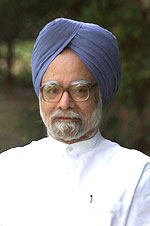
CURRICULUM VITAE
DR. MANMOHAN SINGH PRIME MINISTER OF INDIA
ACADEMIC RECORD
1962 D. Phil., Nuffield College, University of Oxford. Topic: India’s Export Trends and Prospects for Self-Sustained Growth. [Published by Clarendon Press, Oxford, 1964]
1957 Economic Tripos [First Class honours], University of Cambridge
1954 M.A. Economics, Panjab University – First Class with first position in the University
1952 B.A. Economics(Hons.), Panjab University – Second Class with first position in the University
1950 Intermediate Panjab University – First Class with first position in the University
1948 Matriculation, Panjab University – First class
PRIZES AND AWARDS
2000 Conferred Annasaheb Chirmule Award by the W.LG. alias Annasaheb Chirmule Trust setup by United Western Bank Limited, Satara, Maharashtra
1999 Received H.H. Kanchi Sri Paramacharya Award for Excellence from Shri R. Venkataraman, former President of India and Patron, The Centenarian Trust
1999 Fellow of the National Academy of Agricultural Sciences, New Delhi.
1997 Conferred Lokmanya Tilak Award by the Tilak Smarak Trust, Pune
1997 Received Justice K.S. Hegde Foundation Award for the year 1996
1997 Awarded Nikkei Asia prize for Regional Growth by the Nihon Keizai Shimbun Inc. (NIKKEI), publisher of Japan’s leading business daily
1996 Honorary Professor, Delhi School of Economics, University of Delhi, Delhi
1995 Jawaharlal Nehru Birth Centenary Award of the Indian Science Congress Association for 1994-95
1994 Asiamoney Award, Finance Minister of the Year
1994 Elected Distinguished Fellow, London School of Economics, Centre for Asia Economy, Politics and Society
1994 Elected Honorary Fellow, Nuffield College, University of Oxford, Oxford, U.K.
1994 Honorary Fellow, All India Management Association
1993 Euromoney Award, Finance Minister of the year
1993 Asiamoney Award, Finance Minister of the Year
1987 Padma Vibhushan Award by the President of India
1986 National Fellow, national Institute of Education, N.C.E.R.T.
1985 Elected President, Indian economic Association
1982 Elected Honorary Fellow, st. John’s College, Cambridge,
1982 Elected Honorary Fellow, Indian Institute of bankers
1976 Honorary Professor, Jawaharlal Nehru University, New Delhi
1957 Elected Wrenbury Scholar, University of Cambridge, U.K.
1955 Awarded Wright’s Prize for distinguished performance, & St. John’s college, Cambridge, U.K.
1956 Awarded Adam Smith Prize, University of Cambridge, U.K.
1954 Uttar Chand Kapur Medal, Panjab university, for standing first in M.A.(Economics), panjab University, Chandigarh
1952 University Medal for standing First in B.A. Hon.(Economics), panjab University, Chandigarh
Recipient of Honorary Degrees of D.Litt. from :
- Panjab University, Chandigarh
- Guru Nanak University, Amritsar
- Delhi University, Delhi
- Sri Venkateswara University, Tirupathi
- University of Bologna, Italy
- University of Mysore, Mysore
- Chaudhary charan Singh Haryana Agricultural University, Hisar (D.Sc)
- Kurukshetra University
- Thapar Institute of Engineering & Technology, patiala (D.Sc)
- Nagarjuna University, Nagarjunanagar
- Osmania University, Hyderabad
- University of Roorkee, Roorkee (Doctor of Social Sciences)
- Doctor of Laws by the University of Alberta, Edmonton, Canada
- Dr. Bhimrao Ambedkar University (formerly Agra University) - Doctor Letters degree
- Indian School of Mines, Dhanbad (Deemed University) D.Sc. (Honoris Causa)
- Pt. Ravishankar Shukla University, Raipur
WORK EXPERIENCE AND POSITIONS HELD
May 22, 2004 – till date: Prime Minister of India
March 21, 1998 – May 22,2004: Leader of Opposition, Rajya Sabha (Council of States) Parliament of India
June, 2001: Re-elected as member of Rajya Sabha for a Term of six years
August 1, 1996 - Dec 4, 1997: Chairman, Parliamentary Standing Committee on Commerce, Rajya Sabha
June 21, 1991- May 15, 1996: Finance Minister of India
June, 1995: Re-elected Member of Rajya Sabha for a term of six years
September, 1991: Elected Member of Rajya Sabha
March 1991-June 1991: Chairman, University Grants Commission
Dec 1990 – March 1991: Advisor to Prime Minister of India on Economic Affairs
August 1987 – Nov 1990: Secretary General and Commissioner, South Commission
Jan 1985- July 1987: Dy. Chairman, Planning Commission of India
Sept 1982 – Jan 1985: Governor, Reserve Bank of India
April 1980 – Sept 1982: Member-Secretary, Planning Commission, India
Nov.1976 – April 1980: Secretary, Ministry of Finance Dept. of Economic Affairs, Government of India Member [Finance], Atomic Energy Commission, Govt. of India Member [Finance], Space Commission, Govt. of India
1972 – 1976: Chief Economic Adviser, Ministry of Finance, India
1971 – 1972: Economic Adviser, Ministry of Foreign Trade, India
1969 – 1971: Professor of International Trade, Delhi School of Economics, Delhi University, India
1966 – 1969: UNCTAD, United Nations Secretariat, New York Chief, Financing for Trade Section 1966 : Economic Affairs Officer
1957 – 1965 : Panjab University, Chandigarh 1963-65 : Professor of Economics 1959-63 : Reader in Economics 1957-59 : Senior Lecturer in economics
OTHER ASSIGNMENTS
Leader of the Indian delegation to the Commonwealth Heads of Government Meeting, Cyprus (1993)
Leader of the Indian delegation to the Human Rights World Conference, Vienna (1993)
Governor of India on the Board of Governors of the IMF and the International Bank of Reconstruction & Development (1991-95)
Appointed by Prime Minister of India as Member, Economic Advisory Council to the Prime Minister (1983-84)
Chairman, India Committee of the Indo-japan ;Joint Study Committee (1980-83)
- Leader, Indian Delegation to :
Indo-Soviet Monitoring Group Meeting (1982)
Indo-Soviet Joint Planning Group Meeting (1980-82)
Aid India Consortium Meetings (1977-79)
- Member Indian Delegation to :
South-South Consultation, New Delhi (1982)
Cancun Summit on North-South Issues (1981)
Aid-India Consortium Meetings, Paris (1973-79)
Annual Meetings of IMF, IBRD & Commonwealth Finance Ministers (1972-79)
Third Session of UNCTAD, Santiago (April-May 1972)
Meetings of UNCTAD Trade & Development Board, Geneva (May 1971 – July 1972)
Ministerial Meeting of Group of 77, Lima (Oct.1971)
- Deputy for India on IMF Committee of Twenty on International Monetary Reform (1972 – 74)
- Associate, Meetings of IMF Interim Committee and Joint Fund-Bank Development Committee (1976-80, 1982-85)
- Alternate Governor for India, Board of Governors of IBRD (1976-80)
- Alternate Governor for India, Board of Governors of the IMF (1982-85)
- Alternate Governor for India, Board of Governors, Asian Development Bank, Manila (1976-80)
- Director, Reserve Bank of India (1976-80)
- Director, Industrial Development Bank of India (1976-80)
- Participated in Commonwealth Prime Ministers Meeting, Kingston (1975)
- Represented Secretary;-General UNCTAD at several inter-governmental meetings including :
Second Session of UNCTAD, 1968
Committee on Invisibles & Financing Related to Trade, Consultant to UNCTAD, ESCAP and Commonwealth Secretariat
- Member, International Organizations :
Appointed as Member by the Secretary-General, United Nations of a Group of Eminent Persons to advise him on Financing for Development (December, 2000)
PUBLICATIONS
(i) Author of book “India’s Export Trends and Prospects for Self-Sustained Growth” [Clarendon Press, Oxford University, 1964]
(ii) Have published a large number of articles in economic journals
-----------------------------------------------------------------------------
S/o. Shri Gurmukh Singh
Born on 26th September, 1932
Married in 1958 to Smt. Gursharan Kaur
Have three daughters

Friday, March 25, 2005
Sulekha.com: Half-a-Million Pages of Content and Growing -New market for Indian entrepreneurs
Special to India-West
He is a dedicated man almost to the point of being obsessive. He talks,
acts and breathes portals. Qualified in engineering, computers and
finance, he is a dot-com pioneer with a difference. He invites people to
write for his Web site, but he does not pay for their contributions. I am
talking about the portal -- www.Sulekha.com -- and its founder, Satya
Prabhakar.
What do these creative producers get in return? The thrill of seeing their
work over the Web.
Prabhakar's is an original concept. His portal hosts creative pieces from
writers, artists, and photographers for free. Does that mean there are
people yearning to write or showcase their creative genius? You bet.
Prabhakar, the electronics engineer, told India-West in a recent
interview: "I knew software and how to create an infrastructure in an
interactive mode, but for content I had to seek help, I had no resources.
It all started as a hobby; I had no intention of becoming an
entrepreneur."
This simple concept started as an e-mail list of IIM, Calcutta, alumni
called Dakghar founded by Arun Kumar, and Satya Prabhakar was on the list.
Today, in its new avatar, Prabhakar's sulekha.com has grown into a
repository of almost half a million pages of content and counting.
Briefly, "su-lekha" means good writing. Contributions pour in from 50
countries and the authors run the entire gamut ranging from students to
military commanders to doctors to businesswomen and, of course, engineers
based in the United States.
Like a basement or garage operation made famous by the likes of Bill
Gates, the husband-wife team of Satya Prabhakar and Sangeeta Kshettry
started their operation out of a spare room of their home in Austin, Texas
in 1998. "After using our personal savings of more than $15,000 used
mainly to obtain high-speed Internet access, and after 10,000 hours of
effort," recalls Prabhakar, "in September 2000, we were ready for the
rough and tumble of the investment world."
They were helped by New Yorker R. Parameswaran, leader of the initial
investor group and now chairman of the parent company -- Smart Information
Worldwide -- that owns Sulekha.com. Says Parameswaran, "The most
remarkable and innovative aspect of Sulekha is organic growth sustained by
the network effect of people-to-people interaction and the contributions
of diverse Indians from around the globe." While amplifying value for all
network nodes in a dramatic fashion, the chairman added, partnerships like
Sulekha's bring extraordinary strategic value to all involved.
Started as a Web magazine, more as a hobby e-zine, Sulekha.com today has
influenced networks of Indians promoting communities through free flow of
expression and interaction. "Since its inception," says Prabhakar, "the
site has grown exponentially, by almost 20 to 25 percent, in traffic." A
predominantly interactive site, people all over the world contribute
content with coffeehouse chats, classifieds, city events, a Newshopper,
and buddy sites for like-minded people.
Content for the site has grown purely by word-of-mouth and the intense
loyalty of its members. Online participation by thousands evidently helps
make the site a vibrant, loyal and dynamic platform. Last May, Austin
became the first self-generative metropolitan city to create content and
host a hub. Sulekha now has 25 cities as hosts including San Francisco and
Los Angeles.
The site's Global Newshopper picks up the latest news from several surfers
who constantly post content. News from the world's newspapers gets posted
promptly which triggers a spate of discussions on their Coffeehouse space.
Being completely interactive, posts appear instantly, leading to
up-to-date comment, time differentials notwithstanding. Sulekha's movie
site has interactive reviews and visitors to the site can soar or sink a
film's rating.
The company's first published paperback, "Sulekha Select," a collection of
42 writings (see separate story), is the Web site's first foray into the
traditional print format, for, generally, Sulekha creations exist in
cyberspace. Selected from about 1,200 writings since 1998, this collection
captures the essence of the modern Indian experience and represents
individual expressions from all over the world.
Interestingly, most of the contributors do not write for a living, and
many happen to be engineers, where the Net plays a dominant role. The book
has also been released in India by Penguin under a different title -
"Black, White and Shades of Brown" - for the Indian subcontinent and
Singapore. However, Prabhakar clarifies, "These are all amateur writers
united by their love for writing and reading and hail from varied
backgrounds, persuasions and cultural contexts." The book represents a
communal art form - a kind of democratic Netizen of the people by the
people -- in that the readers are the ones who produce content, not the
publishers (see sidebar).
Prabhakar, 36, a native of Machilipatnam, Andhra Pradesh, is CEO of
Sulekha.com. An engineering graduate from Regional Engineering College in
Trichy, Tamil Nadu, Prabhakar also has an M.S. in computer science and an
MBA in finance from the University of Florida.
He has had his fill of corporate life in India and America with
multinationals like Philips, TCS, and later with Honeywell as a software
engineer, and with SBC Communications in Texas. His expertise includes Web
media management, electronic commerce, and real-time multimedia.
Prabhakar's wife, Sangeeta Ksheetry, who is vice president of content for
Sulekha.com, has a B.Sc. in economics from Presidency College, Calcutta,
an M.A. in communications from the Annenberg School at the University of
Pennsylvania, and an MBA in marketing from the University of Florida.
Ksheetry, who is experienced in financial analysis and IT strategy
development, told India-West: "'Sulekha Cities' is the most comprehensive
network of city portals that provides geographically-focused communities
that facilitate commerce and information at the city level."
But where's the revenue model? The site earns income through sale and
syndication of content -- offline and online - advertising, sponsorships,
and subscriptions. It has created a rack of transaction services starting
with online ticketing for organizations and companies.
"Whatever we do we want to be the dominant player in that space, retaining
our focus as a community builder," says Prabhakar. These transaction
services help generate revenue and establish relationships with offline
communities, and Prabhakar has to constantly shun opportunities that are
not a close fit.
Sulekha.com is now possibly the biggest online ticketer for events and
movies all over North America on 50 cinema screens - a Ticketmaster of
sorts. One can also send gifts of movie tickets within the U.S. over the
Web -- popcorn not included!
To a question about who does the editing of its content, Prabhakar said
his editors are based in several countries including the U.S., India,
Canada, Pakistan, Bangladesh and England. Before any content goes up on
the site, at least one editor checks and edits the material.
Added Prabhakar, "We are a decentralized operation and have 16 editors
around the world who volunteer their services. The bunch includes an ad
agency CEO, a 19-year-old journalist from Atlanta, a fiction writer from
Boston, a computer engineer from Silicon Valley, a Mumbai mother, a
Calcutta professor, a Kovalam, Kerala writer, and several others with
varied backgrounds."
Most of the editors hold 9-5 jobs. Kris Chandrasekar, an investment banker
from San Francisco, edits manuscripts as a hobby. A writer himself, he has
"the task of selecting pieces, editing for grammar and style, and a brief
turn-around time for copy-edits."
Instead of being paid a salary, Sulekha pays to the individual's favorite
charity. As part of their social initiative, Prabhakar says "we have
contributed more than $10,000 to various charities."
V.Chandrasekhar, a compulsive Sulekha surfer from Indianapolis, Indiana,
who feels that the hardest problem in this country is meeting people of
similar interests, says "Sulekha is a major avenue that draws together our
similar tastes. The other day I got into a discussion with another Sulekha
user about kite flying and how in the good old days, we used to apply
glass to the string - maanja -- to help in cutting other kites."
Chandrasekhar has given up watching television and says, "I would gladly
give up my cable TV for Sulekha."
To a query, "Since Sulekha is an interactive site where anyone can post
content, how do you control irrelevant and objectionable material being
posted?" Prabhakar responded, "We have content managers who, while
allowing free rein to express and interact freely, are like gatekeepers,
who constantly monitor any questionable material getting in." He added
that they also have an auto-alert system which prevents questionable or
obscene material from being disseminated immediately.
Prabhakar hopes to build an influential community of Indians worldwide and
for that, "I believe we require two fundamental components: (i) Expression
-- people must be able to freely express their mind in writing, art,
stills or even in creating audios and videos; (ii) Interaction --
everything we offer on the site is an opportunity to interact and get to
know each other through the interactive Sulekha community."
Yet Prabhakar is also making a conscious effort to be known not as an NRI
site, but as a venue for Indians all over the world, which has nothing to
do with income level or presence, but to make the experience as Indian as
possible. The fact remains that a lot of contributors tend to be in North
America in view of their accessibility, wherewithal and influence. The
current stats are that 70 percent of use emanates from the U.S. and
Canada, about 15 percent from India, with the balance from around the
world, where Indians reside.
Sulekha is preparing to unveil the world's first electronic store selling
digital content sourced from Indians around the world. Lata Sundar,
director of content in the company's Chennai office, explains: "Sulekha
today features free content contributed by South Asians, and we are moving
up the content value chain by compiling valuable content from contributors
from all over the world that people will gladly pay for."
Prabhakar routinely works 16-17 hours a day, yet allocates half-an-hour
every morning to read and discuss a news story from the New York Times or
the Wall Street Journal with his 8-year-old daughter Divya. He is a lesson
or two short of a black belt in the Chinese martial art form, Tai-kwon-do.
The man who talks with equal passion about Advaita philosophy and Zen
Buddhism as he articulates about portals and gigabytes says, "One has to
be totally in love with one's work and be capable of working with
determination and resolve without craving too much for success. It is the
craving for success that corrupts the process and makes success harder to
come by."
Still wonder how they make money then read this -Sulekha's Case Study
Monday, March 14, 2005
My America - By RK Narayan
I discussed the subject with Prof. Ainslee Embree of Columbia University who has had a long association with Indian affairs and culture. His reply was noteworthy. "Why not Indians as well? In course of time they will be Americans. The American citizen of today was once an expatriate, a foreigner who had come out of a European or African country. Why not from India too? We certainly love to have Indians in our country."
There are however, two views on this subject. The elderly parents of Indians settled in America pay a visit to them, from time to time (on excursion round ticket), and feel pleased at the prosperity of their sons or daughters in America. After a Greyhound tour of the country and a visit to Niagara, they are ready to return home when the suburban existence begins to bore them whether at New Jersey, or The Queens or the Silicon Valley neighborhood of California. But they always say on their return, "After all our boys are happy there. Why should they come back to this country, where they get no encouragement?"
Exasperation
Our young man who goes out to the States for higher studies or training, declares when leaving home, "I will come back as soon as I complete my course, may be two years or a little more, but I will definitely come back and work for our country, and also help our family....." Excellent intentions, but it will not work that way. Later when he returns home full of dreams, projects, and plans, he only finds hurdles at every turn when he tries for a job or to start an enterprise of his own. Form-filling, bureaucracy, caste and other restrictions, and a generally feudal style of functioning, exasperate the young man and waste his time. He frets and fumes as days pass with nothing achieved, while he has been running around presenting or collecting papers at various places.
He is not used to this sort of treatment in America, where, he claims, he could walk into the office of the top man anywhere, address him by his first name and explain his purpose; when he attempts to visit a man of similar rank in India to discuss his ideas, he realizes that he has no access to him, but can only talk to subordinate officials in a hierarchy. Some years ago a biochemist returning home and bursting with proposals, was curtly told off by the big man when he innocently pushed the door and stepped in. "You should not come to me directly, send your papers through proper channels." Thereafter the young biochemist left India once for all. having kept his retreat open with the help of a sympathetic professor at the American end. In this respect American democratic habits have rather spoilt our young men. They have no patience with our official style or tempo, whereas an Indian at home would accept the hurdles as inevitable Karma.
The America-returned Indian expects special treatment, forgetting the fact that over here chancellors of universities will see only the other chancellors, and top executives will see only other top executives and none less under any circumstance. Our administrative machinery is slow, tedious, and feudal in its operation, probably still based on what they called the Tottenham Manual, creation of a British administrator five decades ago.
Lack of Openings
One other reason for a young man's final retreat from India could also be attributed to the lack of openings for his particular qualification. A young engineer trained in robotics had to spend all his hours explaining what it means, to his prospective sponsors, until he realized that there could be no place for robots in an over-crowded country.
The Indian in America is a rather lonely being, having lost his roots in one place and not grown them in the other. Few Indians in America make any attempt to integrate in American cultural or social life. So few visit an American home or a theater or an opera, or try to understand the American psyche. An Indian's contact with the American is confined to his colleagues working along with him and to an official or seminar luncheon. He may also mutter a "Hi!" across the fence to an American neighbor while lawn-mowing. At other times one never sees the other except by appointment, each family being boxed up in their homes securely behind locked doors.
After he has equipped his new home with the latest dish-washer, video, etc., with two cars in the garage and acquired all that the others have, he sits back with his family counting his blessings. Outwardly happy, but secretly gnawed by some vague discontent and aware of some inner turbulence or vacuum, he cannot define which. All the comfort is physically satisfying, he has immense "job satisfaction" and that is about all.
Ennui
On a week-end he drives his family fifty miles or more towards another Indian family to eat an Indian dinner, discuss Indian politics, or tax problems (for doctors particularly this is a constant topic of conversation, being in the highest income bracket). There is monotony in this pattern of life. so mechanical and standardized.
In this individual, India has lost an intellectual or an expert; but it must not be forgotten that the expert has lost India too, which is a more serious loss in the final reckoning.
The quality of life in India is different. In spite of all its deficiencies, irritations, lack of material comforts and amenities, and general confusion, Indian life builds up an inner strength. It is through subtle inexplicable influences (through religion, family ties, and human relationships in general). Let us call them psychological "inputs" to use a modern terminology, which cumulatively sustain and lend variety and richness to existence. Building imposing Indian temples in America, installing our gods therein and importing Indian priests to perform the puja and festivals, are only imitative of Indian existence and could have only a limited value. Social and religious assemblies at the temples (in America) might mitigate boredom but only temporarily. I have lived as a guest for extended periods in many Indian homes in America and have noticed the ennui that descends on a family when they are stuck at home.
Children growing up in America present a special problem. They have to develop themselves on a shallow foundation without a cultural basis, either Indian or American. Such children are ignorant of India and without the gentleness and courtesy and respect for parents, which forms the basic training for a child in an Indian home, unlike the American upbringing whereby a child is left alone to discover for himself the right code of conduct. Aware of his child's ignorance of Indian life, the Indian parent tries to cram into the child's little head all possible information during an 'Excursion Fare' trip to the mother country.
Differing Emphasis
In the final analysis America and India differ basically, though it would be wonderful if they could complement each other's values. Indian philosophy lays stress on austerity and unencumbered, uncomplicated day-to-day living. On the other hand, America's emphasis is on material acquisitions and a limitless pursuit of prosperity. >From childhood an Indian is brought up on the notion that austerity and a contended life is good. and also a certain other- worldliness is inculcated through the tales a grandmother narrates, the discourses at the temple hall, and through moral books. The American temperament, on the contrary, is pragmatic.
Indifference to Eternity
The American has a robust indifference to eternity. "Visit the church on a Sunday and listen to the sermon if you like but don't bother about the future," he seems to say. Also, "dead yesterday and unborn tomorrow, why fret about them if today be sweet?" - he seems to echo Omar Khayyam's philosophy. He works hard and earnestly, and acquires wealth, and enjoys life. He has no time to worry about the after-life; he only takes the precaution to draw up a proper will and trusts the Funeral Home around the corner to take care of the rest. The Indian who is not able to live on this basis wholeheartedly, finds himself in a half-way house; he is unable to overcome the inherited complexes while physically flourishing on the American soil. One may hope that the next generation of Indians (American-grown) will do better by accepting the American climate spontaneously or in the alternative return to India to live a different life.
- RK Narayan